
Appraisal: Bermudian Queen Anne Chair, ca. 1735
Clip: Season 30 Episode 20 | 4m 10sVideo has Closed Captions
Appraisal: Bermudian Queen Anne Chair, ca. 1735
Check out Leigh Keno's appraisal of a Bermudian Queen Anne chair, ca. 1735 in Vintage First Finds, Hour 5.
Problems playing video? | Closed Captioning Feedback
Problems playing video? | Closed Captioning Feedback
Funding for ANTIQUES ROADSHOW is provided by American Cruise Lines and Ancestry. Additional funding is provided by public television viewers.
Support provided by:


Appraisal: Bermudian Queen Anne Chair, ca. 1735
Clip: Season 30 Episode 20 | 4m 10sVideo has Closed Captions
Check out Leigh Keno's appraisal of a Bermudian Queen Anne chair, ca. 1735 in Vintage First Finds, Hour 5.
Problems playing video? | Closed Captioning Feedback
Where to Watch Antiques Roadshow
Antiques Roadshow is available to stream on pbs.org and the PBS app.
Buy Now

ANTIQUES ROADSHOW's 2026 Production Tour
Enter now for a chance to win a pair of free tickets to one of the three stops on ANTIQUES ROADSHOW's 2026 Tour. Sweepstakes entry deadline is April 6.Providing Support for PBS.org
Learn Moreabout PBS online sponsorshipAPPRAISER: I'm-I'm looking at certainly the oldest item that I've had a chance to look at today.
GUEST: Huh.
APPRAISER: And it's-it's-it's great to be here with you and-and to look at this chair.
Tell me, how did you come across the, the chair?
GUEST: It came out of an estate sale in a small town not too far from here, and it was kind of a parlor game to figure out what it was.
People who were interested in furniture kind of enjoy looking at it, so.
APPRAISER: So you've had people, people that have visited you have come over and-and you've said, "Come on.
You- you take a guess at where it was made and how old."
GUEST: You think, you know, stylistically, furniture and so on, tell me about it.
APPRAISER: And what have they, what have you come up with so far?
Have you had some people say that it's Czechoslovakian or Russian or...?
(chuckles) GUEST: Well, uh, no, typically English, I've heard, and, um, early 17th century to Arts and Crafts in the 19th century.
APPRAISER: Right.
Right.
Believe it or not, the chair was made in Bermuda.
GUEST: Ah.
APPRAISER: And when it was a British colony, which it still is a British colony, I understand, but probably in the, uh, the 1730s or 1740s.
GUEST: Hm.
APPRAISER: And Bermuda was actually a source of a lot of English furniture.
The mother country would send these Queen Anne chairs to Bermuda.
By the 1730s, Bermuda was making its own works of art like this, just as furniture to export, and furniture for their own use.
GUEST: Mm-hmm.
APPRAISER: So it's come a long ways from Bermuda.
Um, I, you-you love... wouldn't you love to know how it came all the way from, uh, Bermuda to... GUEST: To Missouri?
APPRAISER: To Missouri.
Well, it's a Queen Anne chair, okay?
And the great thing about it is that you-you-you see this, uh, S-curve.
And this curve really started first in China, but then in England in the late 17th century.
And it's really known as Hogarth's Curve.
Hogarth wrote a book in 1753 called The Analysis of Beauty.
And in the book he says that the most beautiful line in nature is this S-curve, and it's based on the line in a woman's back, that wonderful line.
That's why I kind of like that, uh, that line a lot.
GUEST: Yeah.
APPRAISER: That's why Queen Anne's my favorite style.
But it also fits the back very well because your shoulders are up here, the lower back is down here, and it supports the back and fits the curve.
GUEST: Right, it fits very nicely.
APPRAISER: So here you have that nice S-curve, that kind of sexy curve, uh, on this leg.
And very nice peak knee coming down to really what is, what is known in the trade as a Flemish foot.
GUEST: Ah.
APPRAISER: And it's joined by these, these stretchers, which I-I love the way that it's, they're worn.
Isn't that great?
This is from over 250 years of feet, probably 18th century shoes at one time, and now 20th century.
Nate, did you ever put your shoes there?
GUEST: Yes, I did.
APPRAISER: Softly did, okay.
You probably are wondering, how do we know Bermuda?
GUEST: Right.
APPRAISER: I mean, the one big giveaway is that it's made of cedar.
GUEST: Oh, is that right?
APPRAISER: It's actually cedar wood.
GUEST: That's why no one could guess the wood then.
No one was looking for cedar.
APPRAISER: It's... exactly.
It's, and it's distinctive of, uh, for Bermuda furniture, they had this native wood there.
So they made these chairs in the English style in the wood that they had locally, which is, which is cedar.
And there are people that collect only Bermuda furniture, so this is, really makes it quite a rare, really a rare item.
GUEST: Mm-hmm.
APPRAISER: But I'm going to tell you, there's one thing about it that's happened.
Well, first of all, the crest rail broke off at one time.
It might have fallen backwards.
GUEST: Mm-hmm.
APPRAISER: Some kind of a brawl, and you can see these repairs, do you see how graceful this is?
But then you get up here, and it's kind of clunky.
GUEST: Right.
APPRAISER: What they also did... GUEST: And is this cedar?
Still up here though?
APPRAISER: This is, this looks like a-a hardwood, and I'm not sure it's cedar.
It-it could be a maple-- what they did, though, is they put the splat back on upside down.
GUEST: (laughs) APPRAISER: So that's why the curve is a bit funny.
You see, this kind of should be out here and, and so that your shoulders would go back.
GUEST: Oh, right.
APPRAISER: So they kind of said, it probably broke.
Somebody stuck it on and said, how does this damn thing go?
GUEST: (laughs) APPRAISER: You know, and they kind of, they finally got it upside down.
GUEST: That's great in profile.
APPRAISER: So-- isn't that neat?
Isn't that a neat profile?
So that's really the, the way the splat would have been originally.
GUEST: Ah.
APPRAISER: And it would have made these kind of little Tweety bird heads at the top up in this area.
These little-- I always think of it as a, like, a little bird's beak.
Does it look like that?
A little bit.
GUEST: Yes.
Right.
APPRAISER: So if the chair hadn't been repaired, its value would be probably about $4,000 or $5,000 as a rare Bermuda chair.
Because of the crest rail being replaced, it's probably worth still, to a collector, around $1,500 to $2,000.
GUEST: Hm.
 New
Appraisal: 1867 Carl Haag Watercolor
Video has Closed Captions
Clip: S30 Ep20 | 2m 27s | Appraisal: 1867 Carl Haag Watercolor (2m 27s)
 New
Appraisal: 1912 Titanic Survivors Letter
Video has Closed Captions
Clip: S30 Ep20 | 1m 36s | Appraisal: 1912 Titanic Survivors Letter (1m 36s)
 New
Appraisal: 1933 Duck Soup Movie Poster
Video has Closed Captions
Clip: S30 Ep20 | 2m 2s | Appraisal: 1933 Duck Soup Movie Poster (2m 2s)
 New
Appraisal: 1937 Snow White Animation Cel
Video has Closed Captions
Clip: S30 Ep20 | 2m 7s | Appraisal: 1937 Snow White Animation Cel (2m 7s)
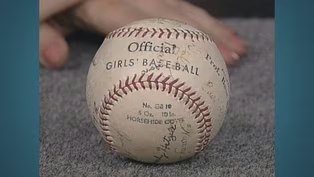 New
Appraisal: 1950 Women's Pro League-signed Baseball
Video has Closed Captions
Clip: S30 Ep20 | 3m 16s | Appraisal: 1950 Women's Pro League-signed Baseball (3m 16s)
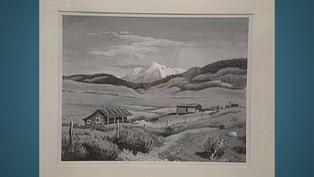 New
Appraisal: 1955 Thomas Hart Benton Painting
Video has Closed Captions
Clip: S30 Ep20 | 1m 52s | Appraisal: 1955 Thomas Hart Benton Painting (1m 52s)
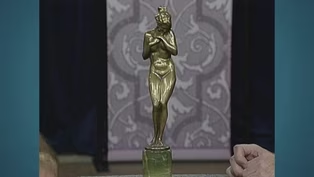 New
Appraisal: Bruno Zach Bronze, ca. 1925
Video has Closed Captions
Clip: S30 Ep20 | 1m 54s | Appraisal: Bruno Zach Bronze, ca. 1925 (1m 54s)
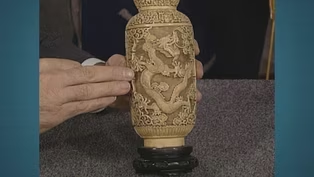 New
Appraisal: Chinese-style Imitation Ivory Vase, ca. 1950
Video has Closed Captions
Clip: S30 Ep20 | 1m 10s | Appraisal: Chinese-style Imitation Ivory Vase, ca. 1950 (1m 10s)
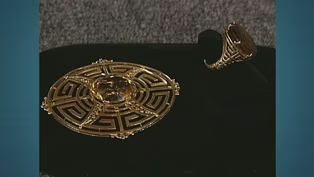 New
Appraisal: Citrine Brooch & Ring, ca. 1915
Video has Closed Captions
Clip: S30 Ep20 | 3m 30s | Appraisal: Citrine Brooch & Ring, ca. 1915 (3m 30s)
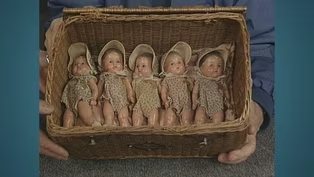 New
Appraisal: Dionne Quintuplets Dolls, ca. 1940
Video has Closed Captions
Clip: S30 Ep20 | 3m 1s | Appraisal: Dionne Quintuplets Dolls, ca. 1940 (3m 1s)
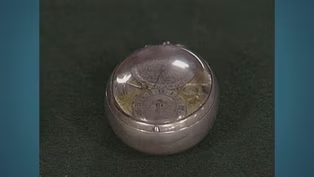 New
Appraisal: Edmund Gilpin Watch, ca. 1670
Video has Closed Captions
Clip: S30 Ep20 | 4m 55s | Appraisal: Edmund Gilpin Watch, ca. 1670 (4m 55s)
 New
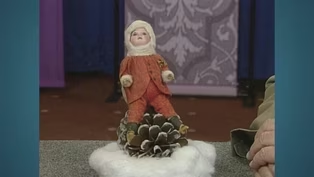
Appraisal: Heubach Snow Baby Container, ca. 1910
Video has Closed Captions
Clip: S30 Ep20 | 3m 31s | Appraisal: Heubach Snow Baby Container, ca. 1910 (3m 31s)
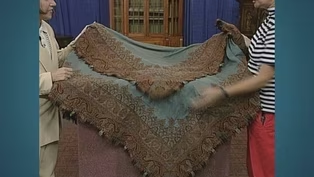 New
Appraisal: Indian Kashmiri Shawl, ca. 1850
Video has Closed Captions
Clip: S30 Ep20 | 1m 14s | Appraisal: Indian Kashmiri Shawl, ca. 1850 (1m 14s)
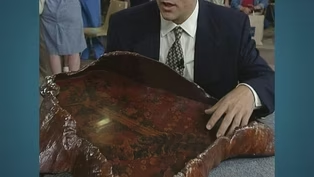 New
Appraisal: Japanese Lacquer Tray, ca. 1910
Video has Closed Captions
Clip: S30 Ep20 | 3m 21s | Appraisal: Japanese Lacquer Tray, ca. 1910 (3m 21s)
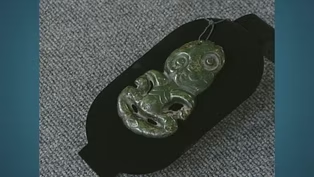 New
Appraisal: Māori Jade Tiki, ca. 1800
Video has Closed Captions
Clip: S30 Ep20 | 2m 40s | Appraisal: Māori Jade Tiki, ca. 1800 (2m 40s)
 New
Appraisal: Mashhad Carpet, ca. 1925
Video has Closed Captions
Clip: S30 Ep20 | 2m 21s | Appraisal: Mashhad Carpet, ca. 1925 (2m 21s)
 New
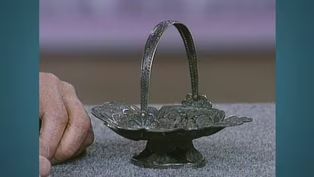
Appraisal: Russian Plique-à-jour Candy Basket, ca. 1885
Video has Closed Captions
Clip: S30 Ep20 | 1m 39s | Appraisal: Russian Plique-à-jour Candy Basket, ca. 1885 (1m 39s)
 New
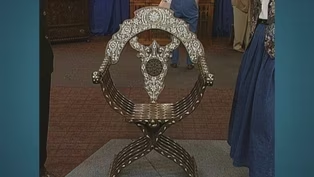
Appraisal: Syrian Savonarola Chair, ca. 1895
Video has Closed Captions
Clip: S30 Ep20 | 3m 16s | Appraisal: Syrian Savonarola Chair, ca. 1895 (3m 16s)
Preview: Vintage First Finds, Hour 5
Video has Closed Captions
Preview: S30 Ep20 | 30s | Discover today’s values for ROADSHOW’s first finds, including one with a whopping update! (30s)
Providing Support for PBS.org
Learn Moreabout PBS online sponsorship New Episode

- Home and How To

Hit the road in a classic car for a tour through Great Britain with two antiques experts.
 New Episode
 New Episode
 New Episode








Support for PBS provided by:
Funding for ANTIQUES ROADSHOW is provided by American Cruise Lines and Ancestry. Additional funding is provided by public television viewers.